
PHOTO Salon 2024, October 30 – November 15
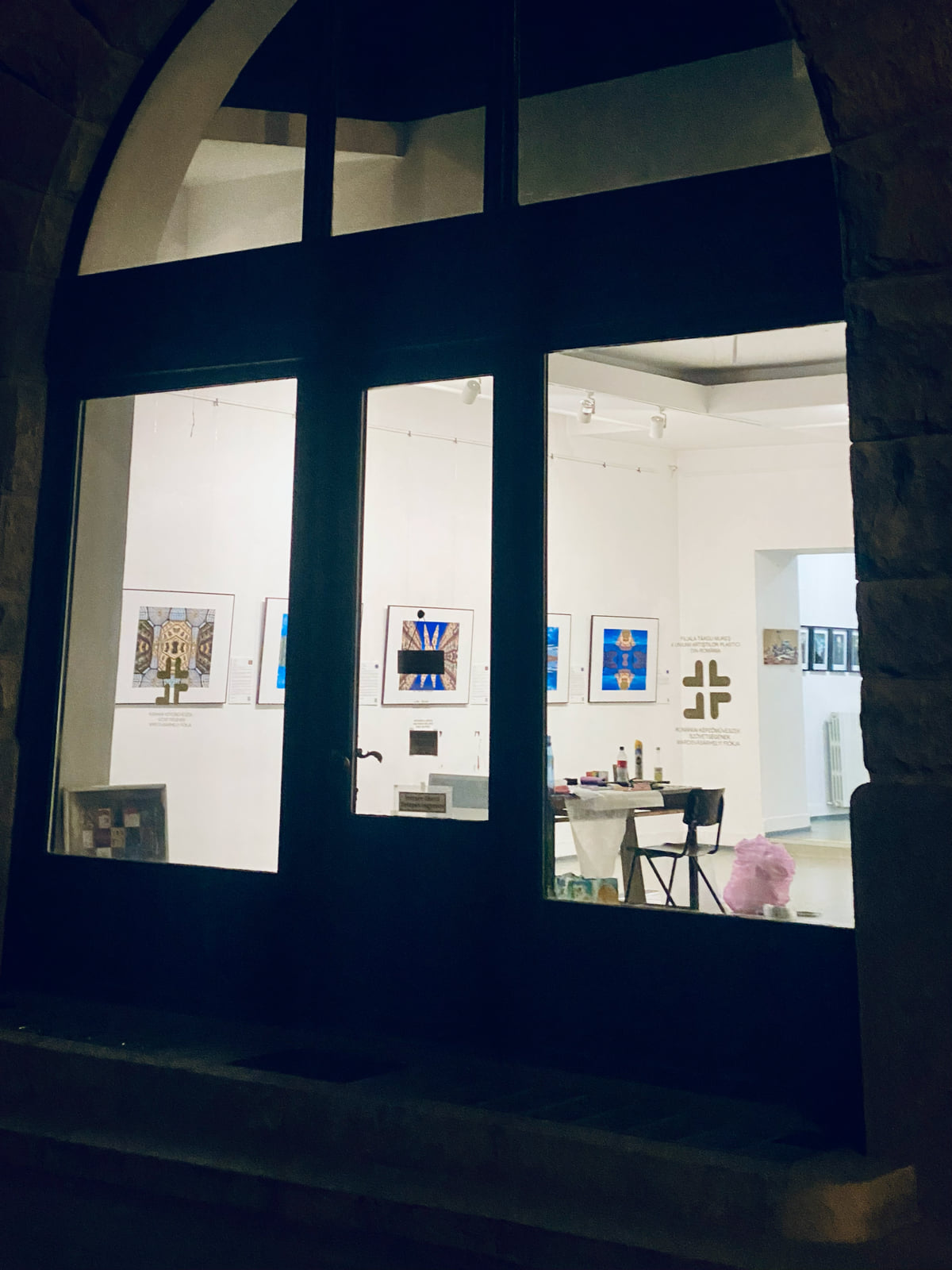
The 2024 Photography Salon, First Edition, was organized by the Targu Mures Branch of the Union of Visual Artists of Romania at the ART NOUVEAU Gallery, 2 George Enescu Street, Targu Mures.
“Wanderer, there is no path; the path is made by walking.”
Antonio Machado
“A dweller of this earth, Rózsa Balázs is an eternal wanderer. Initially trained in the rigorous realm of legal documents, the exacting demands of rigid case files, and notarial chambers overflowing with authentications, legalizations, and endorsements, in 2009 he felt the urge to escape entirely from this strict environment. He sought to shift his perspective on life, to live authentically in rhythm with nature, molding himself to it by dedicating himself to travel and photography as forms of liberation. From a “narrow circle,” his world expanded, becoming boundless through the journeys he has undertaken and continues to pursue.
Rózsa Balázs is a photographer shaped and guided by his own passion. Travel and photography intertwine, forging a new existence, with their essence concentrated in one, two, ten, or hundreds of images. He employs photography in his exhibitions as an extension of the journey, transforming it into the journey within the photograph itself. The latter becomes an act of releasing inhibitions and prejudices. Curiosity is the primary force that keeps him in constant motion. The places he discovers, the people he meets, and his perpetual eagerness to confront the unknown are his ultimate goals.
Life unfolds in multiplied sequences, acting in synergy toward his joy—like a kaleidoscope of astonishingly varied sensations and impressions unfolding at breakneck speed! They even double in symmetry—up and down, right and left—in hypnotic structures! The photographer’s step draws continents and worlds closer, while his phone’s image folder becomes a primordial Pangaea!
The images created by Rózsa Balázs emerge as personal mandalas. They retain the mandala’s rigorous symmetry and typical structure by dividing the surface into four equal segments within a rectangular perimeter. Yet the mandala’s circular diagram is placed within an imaginary frame, like a dome over the spherical world in which he unfolds his existence in this universe. Through photography, he defines and describes his own “psycho-cosmograms,” emphasizing the center. His vision, “RoBaArt,” is equally original. Any one of them can serve as the starting point for another world—a bridge to other universes. Many become oases of rest for the soul or, conversely, sources of powerful, vibrant energy. Imaginary worlds or facets of the one already existing. They create an enticing sensation, an irresistible pull into their depths.


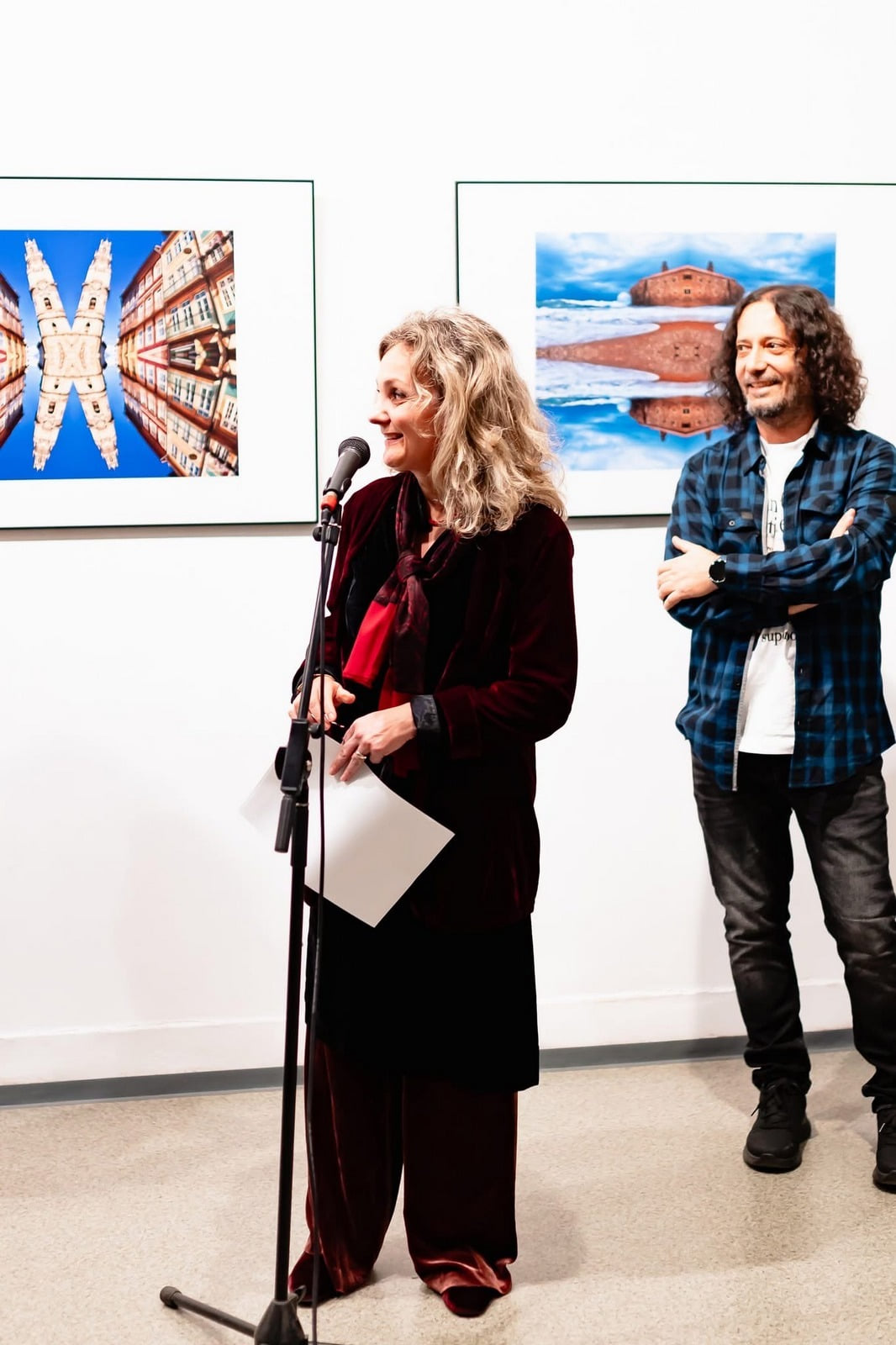


Perspectives shift—from above, from the side, plunging, face-to-face, back-to-back—just as any subject can have infinite viewpoints, while always preserving symmetry. It is a probing of his own limits and imagination. The world above becomes the world below, sideways, and to the left. Maintaining proportional similarities, it resembles the immersion and exploration that the famous character Alice undertakes in Wonderland. But because he shares them, the wonders—and even marvels—captured by the photographic eye become ours as well. Time stretches, contracts, expands infinitely, gathers into tiny pixel points. His images become decorative, sober, provocative—like patterns in which one can quietly live a peaceful, restorative, or recreational life, or, on the contrary, an irritating one. They carry true demonstrations of imagination and the exploration of the unknown. Thus, Rózsa Balázs’s photographs are stories rich in symbols, rooted in reality. They transform through the photographer’s multiplied imagination, exploring complex concepts and challenging viewers to reflect on the nature of reality and conventional logic. Then begins each individual’s adventure of interpretation. The spirit of the place and of the frames themselves shines through, guiding the exploration of meanings.
You pass through green and violet worlds without knowing what they are. Grass or flower or building? Streets that multiply and become labyrinthine, hiding mystery behind structures.
Guided by mind and soul, his foot steps firmly; the photographic eye absorbs insatiably and stores uninterruptedly in the drawers of memory the impressions gathered from seven continents, over 100 countries and capitals, which he transforms into image-states. Life as adventure. Inner knowledge through all that the exterior offers. Fusion. Most often, he realizes that the journey itself and the knowledge gained matter more than the final destination—as do the people encountered along the way. Wandering zigzag across layers of civilization: ancient settlements, tribes, simple forms of life, or, conversely, densely crowded and highly complex in technology; geographical configurations and extreme climatic zones in stark contrast; with the most diverse means of transport; with joyful or sorrowful people—or none at all, only nature in its plenitude. The diversity of nature and human nature. Seemingly chaotic, yet profoundly interconnected. But the latter is almost absent in his photographs. Most often, only the photographer himself.
Braga is blue from its azulejos. In Georgia, you spin on a carousel with your head in the blue sky and feet dipped in water. You hop on a Vespa and travel onward among ferns from which slender, filiform verticals of young trees burst forth. Moldovița is in full bloom on its walls! The Golden Finger (Pouce) speaks of preserving one’s own imprint, one’s identity, in the soul of Qatar. The grandeur of Riga becomes timeless with its celebrated architecture—a blend of medieval Hanseatic, Gothic, and Art Nouveau. A wooden bridge crosses a forested area. The visual result, achieved through his proprietary multiplication technique, evokes a geometric form reminiscent of a stained-glass window. The natural landscape is transformed into an almost abstract construction, suspended between reality and illusion. Tree trunks and railings intersect at a central point like a symbolic gate. You then let yourself be caught in another game of multiple symmetry. A Gothic cathedral and its surrounding landscape are turned into a structure touching the fantastic. The church’s sharp spires multiply around a green center that takes the shape of a vegetal diamond with perfect symmetry. Tension arises between the verticality of the sacred and the horizontality of nature. In the 39th image—a number with magico-introspective connotations for the author—the journey reaches Melbourne, where the landscape approaches abstraction most closely. Identifiable forms diminish almost to extinction, leaving only narrow horizontal chromatic bands. Yet a green core of vegetation remains discernible, as a starting point for further visual experiences.
A journey through time, across times, into the past and future. It can be adventure or meditation. There is no time for boredom!
Thus, the “wanderer” is the seeker, the explorer, and the person in becoming. The author is in an eternal process of transformation and reflection.
And all this with an iPhone and… something more: a Rózsa Balázs Pro to wield it!”
Cora Fodor – Art Historian